
Every year in this country, more than 300,000 adults 65 and older land in the hospital with a broken hip. The CDC's numbers behind that figure carry two details worth sitting with. About three out of four of those hips belong to women. And nearly all of them break the same way: a fall, sideways, from standing height.
Not a car wreck. Not a ladder. Standing height, on a floor or a driveway, on a body whose bones and legs had been quietly weakening for twenty years. On Billings ice, from November to March, that math gets personal.
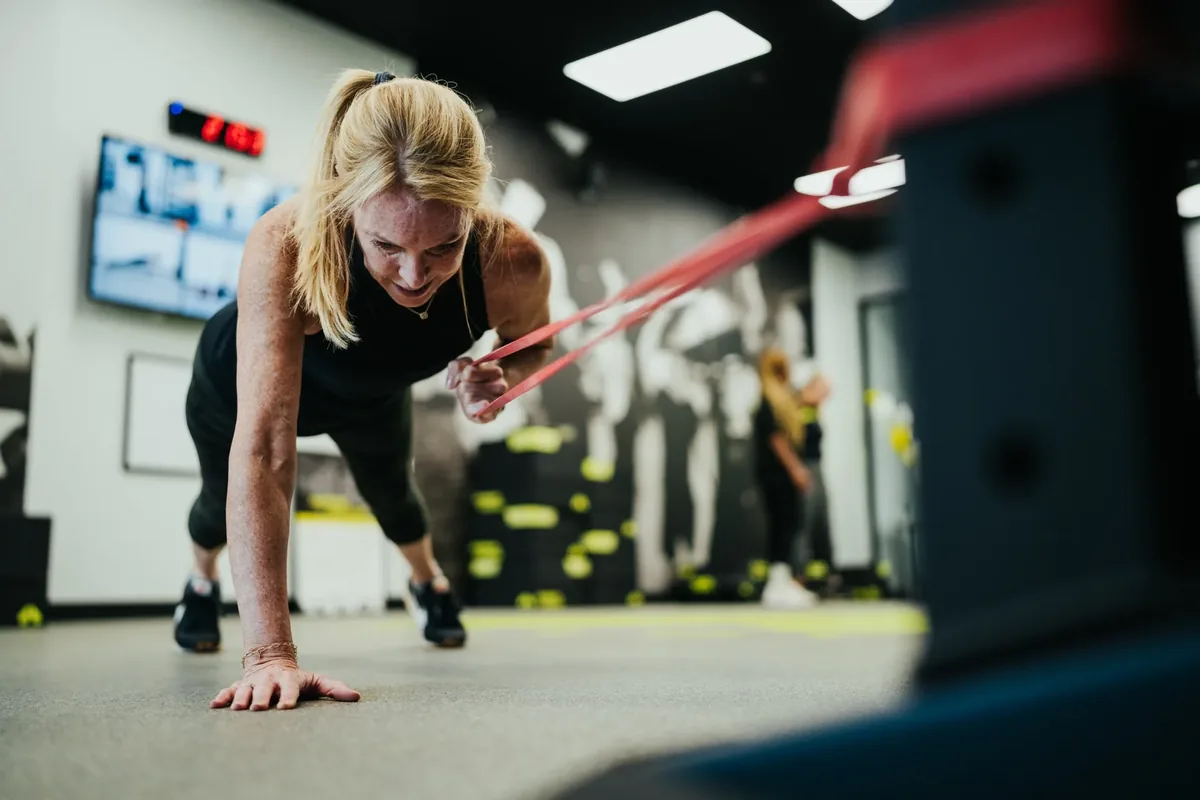
Why does this hit women so much harder than men?
Two reasons stacked together. Women start with less bone mass on average, and the drop in estrogen at menopause accelerates bone loss just as muscle is declining too. The decade after 50 is when the account drains fastest, which makes it the decade when deposits matter most.
None of this is destiny. Bone is living tissue that remodels itself around the demands you place on it. Fewer demands, less bone. That sentence runs in both directions, and the second direction is the whole opportunity.
What kind of exercise actually builds bone?
Loaded movement that your skeleton isn't used to. When muscle contracts hard against resistance, it tugs on the bone it anchors to, and bone answers by laying down more mineral. Progressive resistance training, squats, hinges, presses, rows, carries, with weight that increases over time, is the most reliable way to send that signal after menopause.
If you take medication for bone density or have a diagnosis on file, this all happens in partnership with your doctor, full stop. Bring your DEXA results to your first appointment. A program should be built around what your physician knows about your skeleton, and here it is.
I walk every day. Doesn't that count?
For your heart, your head, and your habit, absolutely. For your skeleton, barely. Walking is the load your bones have carried since age two, so it earns you maintenance at best. The research on walkers versus resistance trainers keeps reaching that same inconvenient conclusion.
There's a second gap walking leaves open: the fall itself. Not falling requires leg power, balance, and the reaction strength to catch yourself mid-slip. Those are trained qualities. A strong woman who hits ice has options. Options are the entire game.
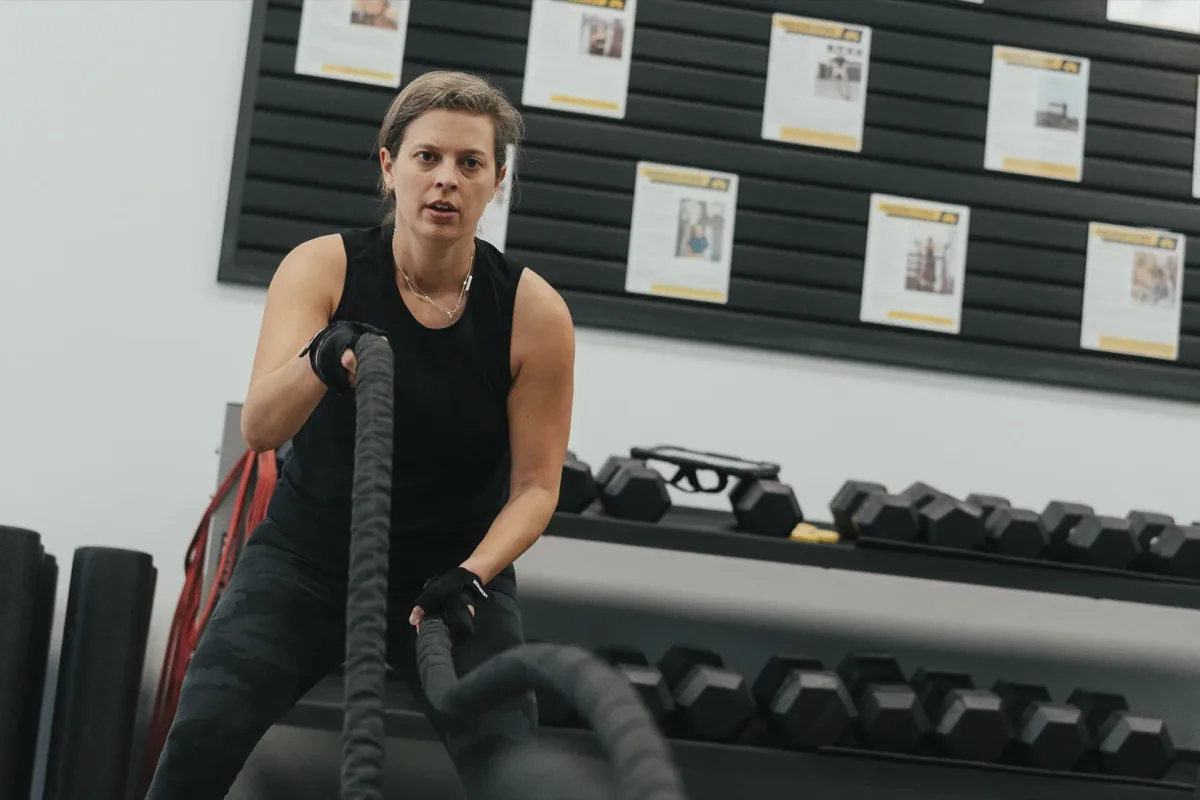
What does this look like at Alloy in Billings?
Like strength training for adults, done properly, in a room that isn't performing for anyone. Sessions are 55 minutes, capped at six people, and your program is yours alone: your starting weights, your progression, your knees and shoulders accounted for. Most members here are 40 to 70, and women lifting real, progressive weight is the daily norm, not the exception.
It starts with a Fitness Consultation. An InBody scan gives your baseline muscle and body fat numbers. A movement assessment maps what your joints will tolerate. You leave with a plan and plain pricing. From there, InBody re-scans and monthly accountability sessions keep the progress visible on paper, not just in feel.
Frequently asked questions
Will lifting make me bulky? No. Visible bulk takes years of specialized training and eating that nobody does by accident. What two or three weekly sessions produce is firmer muscle, better posture, and bones under load. Capability, not bulk.
I'm 58 and have never lifted. Is it too late for my bones? No. Bone and muscle both respond at every age. The best decade to start was your 40s. The second best is right now.
I have osteopenia. Should I be lifting at all? Very likely yes, with your doctor's blessing and a program adjusted to it. Osteopenia is the warning light, and resistance training is one of the few responses that addresses the cause.
Do I need to already know the exercises? Not at all. A coach teaches, watches, and adjusts every movement in every session. Arriving as a beginner is normal here.
Make your deposits while they count
Book a Fitness Consultation at Alloy Personal Training Billings, 4011 Montana Sapphire Drive, Suite 2, or call (406) 296-6667. Your bones respond to what you ask of them. Ask for more.